

Feel like you understand a topic until you try to explain it? The Feynman technique fixes that: you teach the idea in plain words, notice where you stall, and go back to fill those gaps.
This page is part of a wider guide to study techniques that work, which puts several methods in context.
| Item | Value |
|---|---|
| Tes version of the method | Four steps |
| TeachThought version of the method | Five steps, ending with a restatement from scratch |
| Richard Feynman’s lifespan | 1918 to 1988 |
| Feynman’s Nobel Prize in Physics | 1965 |
| Large-scale studies of the technique itself | No single one, per Tes in January 2025 |
These figures come from Tes Magazine and TeachThought. Step counts differ between writers and the research picture can change, so check the sources before you rely on them.
What is the Feynman technique?
The technique is a self-study routine built on explaining an idea in simple language, then letting the places where you stumble decide what to study next. It is named after the physicist Richard Feynman, who lived from 1918 to 1988, according to Tes. TeachThought adds that he won the Nobel Prize in Physics in 1965.
TeachThought also says Feynman was known as the “great explainer” for his ability to translate complex scientific theories into more accessible terms. That reputation is why his name is attached to a method about simplifying.
One caveat is worth knowing. Study writer Scott H Young, whose post helped spread the idea, says the technique itself is only loosely based on Richard Feynman’s practices, even though self-explanation caught on widely.
How the Feynman technique works, step by step
Writers split the method differently. The Mind Collection names four steps: study, teach, identify gaps and simplify. The five-step version below follows TeachThought.
- Clarify the concept. Write it at the top of a blank sheet of paper, and be as specific as you can.
- State what you understand now. Explain it in the plainest language possible, as if teaching someone who knows nothing about it.
- Acquire new knowledge. Where you cannot explain it fully, go back to reread, research and relearn the source material.
- Document the change. Visuals, concept maps and analogies help you clarify your own thinking as your understanding shifts.
- Restate it from scratch. Do this without checking your notes, and repeat the later steps if you cannot.
TeachThought says that if you cannot restate the idea without notes, you go back and repeat steps three through five. Its second step asks for the plainest wording you can manage, because a broad summary is only a foothold, not proof of understanding.
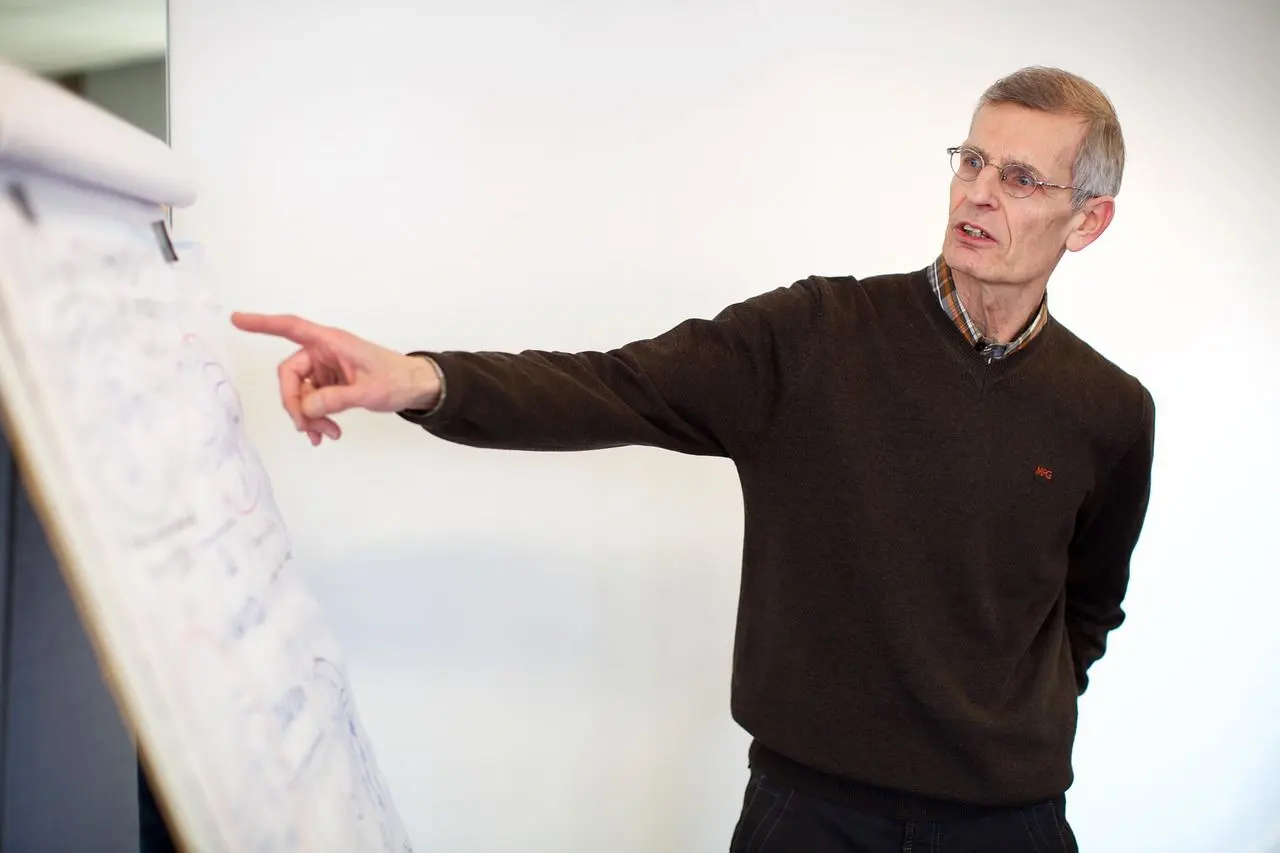
The Tes version is lighter. It suggests teaching the topic to yourself by writing simple summaries from memory, or ideally to someone else who will question you, and then returning to the source for anything you could not recall or understand, as described by Tes.
Does the Feynman technique work?
The honest answer is: probably, for the right jobs, though the evidence is indirect. Tes reports that there is no single large-scale study of whether the technique works, but that its underlying principles (active recall, self-explanation and identifying knowledge gaps) are backed by cognitive psychology research.
If the retrieval side interests you, the guide to active recall goes into it in more depth.
Tes also points to research on the “protégé effect”, which found that merely expecting to teach a topic later was enough to improve students’ learning. In other words, the expectation of teaching can change how you study.
One study cited by Tes suggests learning by teaching works because it is a form of retrieval practice. For that reason, the teaching, whether written or spoken, should be done without notes.
The Mind Collection adds a practical point: teaching a real person rather than an imaginary one is much more effective, because it reveals whether you really know what you are talking about.
When to use it, and when to skip it
The method is not free. Young calls the time cost the biggest complaint about it, and Tes notes it is not believed to be particularly useful for heavy memorisation-based topics, so you should be selective.
Young describes when he reaches for it. According to his post on getting the most from the technique, he relies on self-explanation when all of these hold:
- He cannot apply a concept to the assigned practice questions.
- The idea does not make sense to him.
- He knows the idea is central to understanding the class.
He also warns against swapping explanations for practice. For an exam, he says, omitting practice questions that resemble those on the test is unwise, so treat the Feynman technique as a repair tool alongside problem-solving.
Finally, an explanation you wrote today does not stay sharp on its own. How fast knowledge fades is a separate topic, covered in the guide to the forgetting curve.
Tips for tighter explanations
A vague explanation can hide the very gap you are hunting for. These habits, mostly drawn from Young’s five tips and The Mind Collection, keep it honest:
- Explain the exact problem. If a particular problem tripped you up, start by explaining that exact problem rather than the generic concept.
- Avoid broad terms. Explaining in broad strokes lets you skip the missing link in your reasoning.
- Add analogies, diagrams or examples once you have the general gist of an idea.
- Look for a second explanation. Different teachers skip different steps, so several explanations beat one.
- Limit the scope. Shrink what you intend to learn and teach before you begin.
- Watch for the curse of knowledge. The Mind Collection warns about it when you teach someone else.
Used this way, the technique turns a vague feeling of confusion into a specific question you can take to your notes, a textbook or a teacher.
Frequently asked questions
Do I need another person to use the Feynman technique?
Show answer
No. Tes says you can teach to yourself by writing short summaries from memory. A listener who asks questions is the better option when you can find one.
Why is explaining better than rereading my notes?
Show answer
Rereading can leave you feeling fluent without showing what is missing. Tes argues that explaining a topic simply exposes holes and grey areas in your knowledge, which then guide what you relearn, as described on its Feynman technique explainer.
Is it a good way to memorise long lists of facts?
Show answer
Probably not. Tes reports the method is not believed to suit memorisation-heavy material, so another approach may fit that job better.
Can teachers use it with a class?
Show answer
Yes. Tes suggests sending each student home with a topic to prepare, then having them teach the class later without notes while classmates and the teacher ask questions.