Facing a video lecture and wondering how to take notes in online lectures? Put ideas in your own words instead of typing everything: in one study, laptop note-takers did worse on conceptual questions.
For the wider picture of study habits, read the guide on how to learn online effectively.
| Item | Value |
|---|---|
| Where the study was published | Psychological Science |
| Researchers | Pam A. Mueller (Princeton University) and Daniel M. Oppenheimer (University of California, Los Angeles) |
| Lecture material in the first study | TED talks on various topics |
| Simple fact questions, such as dates | Both groups did equally well |
| Conceptual-application questions | Laptop users did significantly worse |
| Review of notes before the test (third study) | Handwriters still performed better |
The figures come from NPR’s report on the study, and research details can be revised or challenged, so check the source before you rely on them.
What the research says about typing and handwriting
The best-known evidence comes from a study in Psychological Science by Pam A. Mueller of Princeton University and Daniel M. Oppenheimer of the University of California, Los Angeles. As NPR reported, they set out to test how note-taking by hand or by computer affects learning.
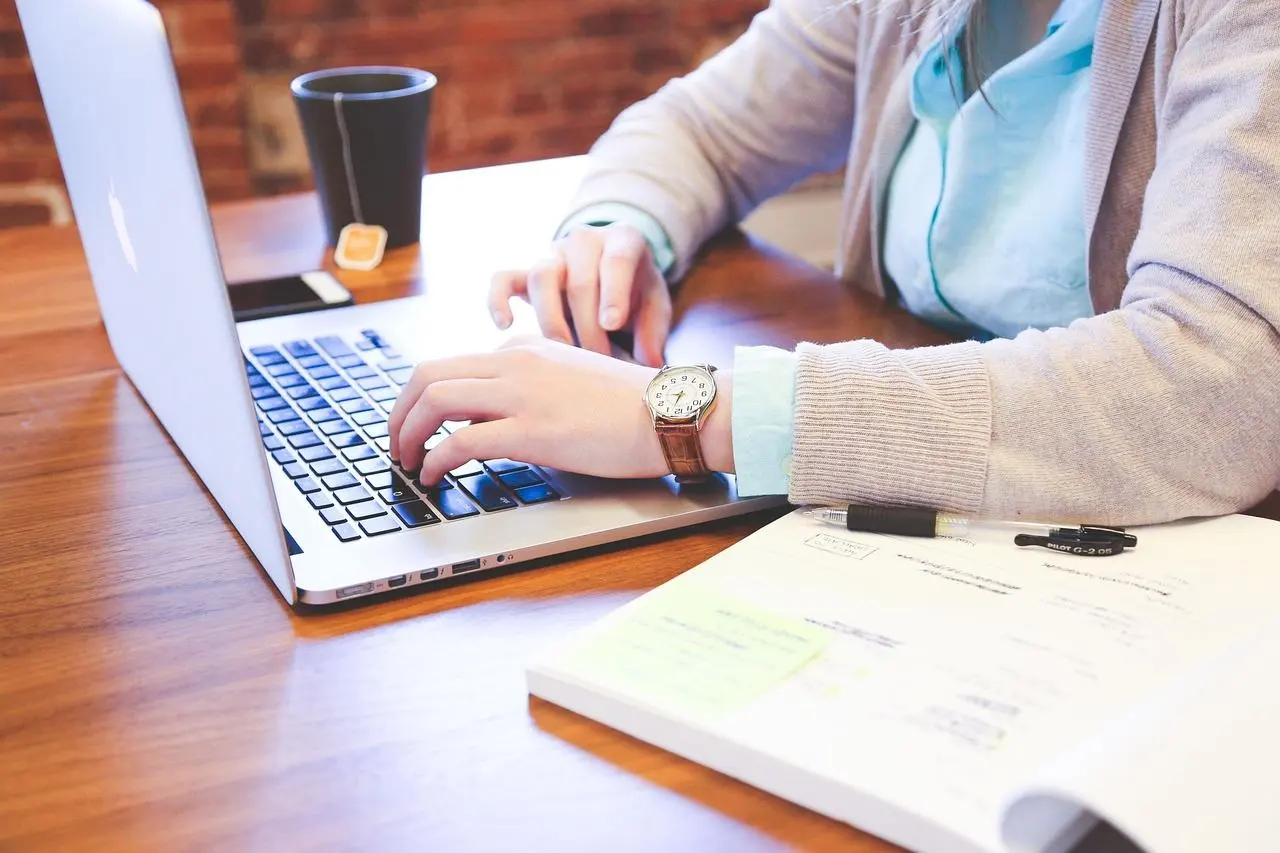
In the first study, university students watched TED talks on various topics. The students who used laptops typed significantly more words than those who wrote by hand, according to the NPR account.
The difference showed up in the type of question. For simple fact questions, like dates, both groups did equally well, but on conceptual-application questions the laptop users did significantly worse, as NPR described.
These students watched recorded talks rather than a full online course. Treat the findings as a useful guide to your own habits, not as a promise about your results.
Why copying everything backfires
Mueller explained that typists tend to produce verbatim notes and try to capture as much of the lecture as they can. Handwriting changed that, because longhand note-takers were forced to be more selective: you can’t write as fast as you can type.
Willpower alone did not fix the habit. In the second study, the researchers told laptop users to avoid writing things down verbatim, and the same result appeared. The more words students copied verbatim, the worse they performed on recall tests, per the same report.
The researchers split notes into two kinds, as NPR summarised:
- Generative notes: summarizing, paraphrasing and concept mapping.
- Nongenerative notes: copying something verbatim.
There are also two ideas about why notes help at all. The encoding hypothesis says the processing that happens while you write improves learning and retention, while the external-storage hypothesis says you learn by looking back at your notes, or at other people’s notes (NPR).
A practical method for video lectures
A recorded lecture gives you something a live room never does: a pause button. Use it to turn passive watching into generative note-taking with these steps.
- Read the lecture title and outline first, and write down one question you want the video to answer.
- Watch a short segment, then pause before you write anything.
- Write the main idea in your own words, in a line or two, without copying the speaker’s sentences.
- Mark anything you cannot paraphrase with a question mark, then replay that part.
- Sketch a small concept map linking the new idea to earlier ones.
- Close other tabs and apps while the video plays.
The pause is the key move. It gives you the same forced selectivity that handwriting gave the students in the study, even if you type.

Should you use paper or a screen?
Typing has a real advantage: NPR notes that it is faster, which helps when there is a lot of information to take down. The same report adds that research shows laptops and tablets tend to be distracting, since it is easy to click over to a social site during a dull lecture.
Mueller did not expect a mass return to paper. She said it would be a hard sell, and pointed to Livescribe and various stylus and tablet technologies as tools she thought would be an easier sell to college students and people of that generation, according to the interview.
So choose the tool you will actually use, then apply the same rule to it. If you type, write short phrases and ideas rather than whole sentences, and keep a notebook beside you for diagrams.
When you are still deciding which course to take, the guide on how to choose an online course is a useful companion.
Make your notes useful afterwards
Notes do their second job when you return to them. In the third study, students could review their notes between the lecture and the test, and those who wrote by hand still performed better.
If you study without a teacher or deadlines, your notes become the backbone of your own self-directed learning routine. A few habits make them easier to reuse:
- Turn each main idea into a question you can answer from memory later.
- Note the video’s timestamp beside unclear points so you can find them again.
- Finish each session with a short summary written without looking at the lecture.
- Reread and tidy your notes soon after watching, while the material is fresh.
Frequently asked questions
Is handwriting always better than typing?
Show answer
No. The research described here compared groups on one set of tasks, and typing remains quicker. What mattered most was how much thinking went into each note, so a typist who paraphrases can follow the same principle.
What if the lecturer speaks too fast to follow?
Show answer
Stop the video whenever you fall behind and replay the section. Capture a keyword or two, then fill in the explanation after the pause rather than racing the speaker.
What are generative notes?
Show answer
They are notes where you transform the material instead of transcribing it. Summaries, paraphrases and concept maps all count, as the researchers framed it in their NPR-reported work.
Should I copy slides or transcripts into my notes?
Show answer
Copying adds little, because it skips the thinking that makes notes useful. Keep the slides as a reference and spend your note-taking effort on your own explanations and questions.